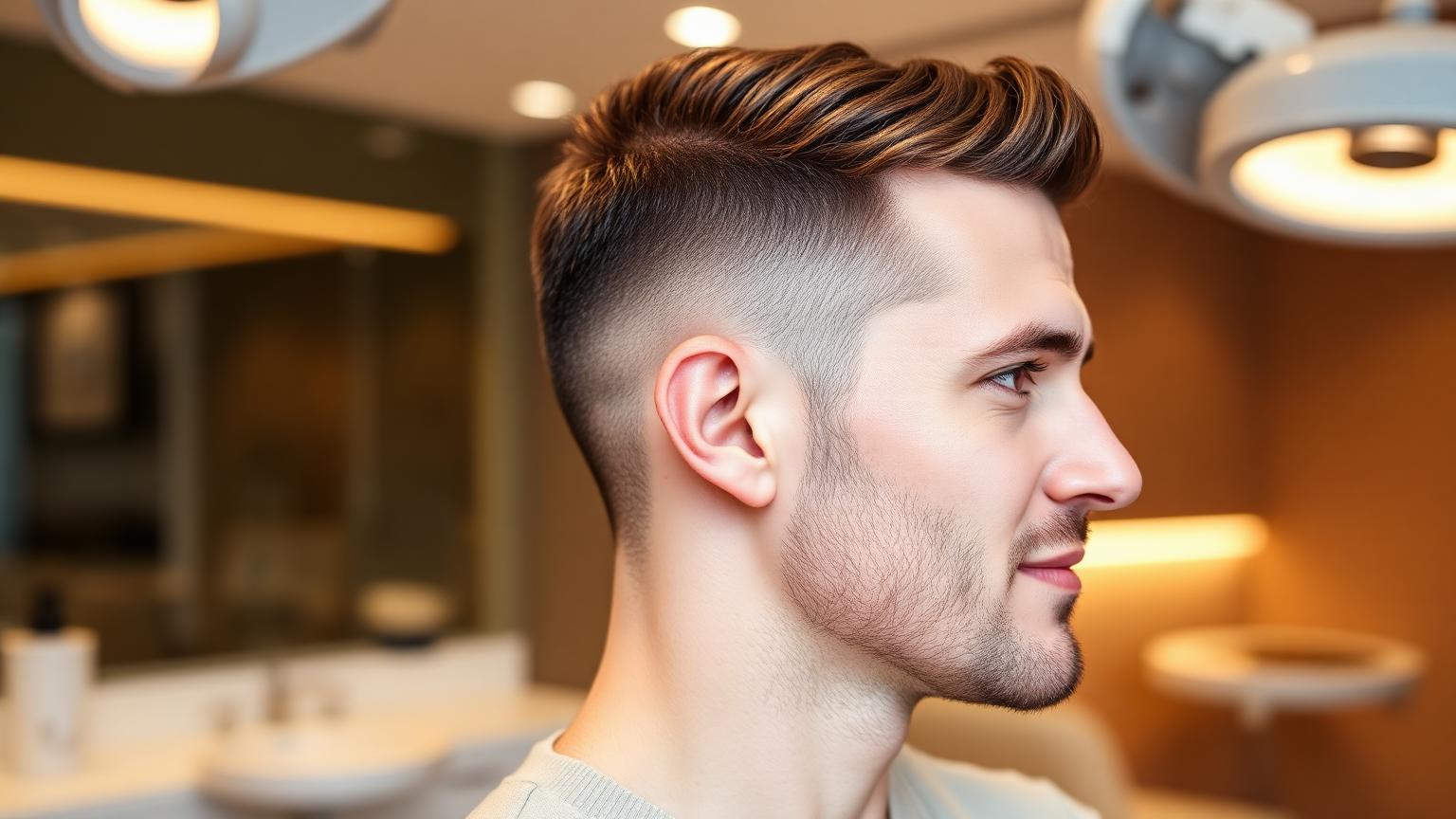
Why Chicago Patients Are Choosing FUE Hair Transplants
FUE hair transplant Chicago is one of the most searched hair restoration topics in the Midwest, and for good reason. It's a minimally invasive procedure that moves individual hair follicles from a dense donor area to thinning or bald zones, leaving no linear scar and requiring little downtime.
If you're trying to find the right Chicago FUE surgeon, here's what you need to know at a glance:
| Factor | What to Know |
|---|---|
| Procedure type | Minimally invasive; individual follicle extraction |
| Scarring | Tiny dot scars only, no linear scar |
| Recovery time | Return to normal in 7 to 10 days |
| First results | New growth visible around 3 to 4 months |
| Full results | 9 to 12 months post-procedure |
| Cost range | From ~$5/graft; packages from $7,500 |
| Top tech options | Advanced automated and manual FUE |
| Best candidates | Adults 25+, stable hair loss, adequate donor hair |
| Complementary treatments | PRP therapy, hormone balancing, genetic testing |
| Consultations | Free; in-person and virtual options available |
Hair loss affects confidence deeply, whether it's a receding hairline, thinning crown, or patchy growth. The good news is that Chicago has a strong field of experienced FUE specialists, and the technology has never been better.
This guide breaks down how FUE works, what it costs, who qualifies, and how to choose the right provider in Chicago, so you can make a confident, informed decision.
I'm Joanna Mirov, Co-Owner of Tru Integrative Wellness in Downers Grove, Illinois, and I've spent years in medical aesthetics helping patients navigate complex decisions around treatments like FUE hair transplant Chicago procedures. My background in integrative wellness means I approach hair loss not just as a cosmetic issue, but as a whole-health concern worth addressing at the root.
Understanding FUE Hair Transplant Chicago: How It Works
Follicular Unit Extraction, or FUE, is the gold standard of modern hair restoration. Unlike older methods that required removing a large strip of skin, FUE involves the meticulous extraction of individual hair follicles. We typically look for "donor" hair on the back and sides of the scalp. Why there? Because these follicles are genetically programmed to be resistant to Dihydrotestosterone (DHT), the hormone primarily responsible for male pattern baldness.
The process is a blend of medical science and artistic design. Using precision punches, often as small as 0.8mm to 1.0mm, a specialist extracts these DHT-resistant units. Once harvested, these follicles are prepared for their new home. The surgeon then creates tiny recipient sites in the thinning areas, paying close attention to the angle, depth, and direction of the existing hair to ensure the results look completely natural.
For many, the journey is about more than just vanity; it's about reclaiming a professional and personal identity. You can read more about hair restoration journeys to see how transformative this process can be.
FUE vs. FUT: Why Modern Patients Choose Extraction
When you begin looking into a FUE hair transplant Chicago, you will inevitably run into its predecessor: Follicular Unit Transplantation (FUT), often called the "strip method." While FUT is still performed, FUE has become the preferred choice for the majority of Chicago patients for several key reasons.
| Feature | FUE (Extraction) | FUT (Strip Method) |
|---|---|---|
| Scarring | Tiny "dot" scars, nearly invisible | Linear scar on the back of the head |
| Recovery | 7 to 10 days; minimal restrictions | 2 to 4 weeks; sutures required |
| Pain Level | Minimal; local anesthetic only | Moderate; potential for "tightness" |
| Activity | Return to gym in ~1 week | Avoid heavy lifting for several weeks |
| Hairstyles | Can wear hair very short | Must keep hair long enough to hide scar |
The primary "win" for FUE is the lack of a linear scar. If you like to keep your hair faded or short on the sides, FUE is the only way to go. Because it is a minimally invasive outpatient procedure, most patients are back to their office or routine within just a few days.
Planning Your Procedure: Cost and Candidacy
Success in hair restoration starts long before the first follicle is moved. It begins with a comprehensive consultation. During this phase, a specialist evaluates your graft count (how many "plugs" you actually need), your hair density, and the overall health of your scalp.
Who Is a Candidate for FUE Hair Transplant Chicago?
Not everyone is an immediate candidate for surgery. Generally, we recommend that patients be at least 25 years old. Before this age, hair loss patterns are often still shifting, and a surgeon needs to see where the "finish line" of your natural hair loss might be to design a hairline that looks good at age 30 to 50, and 70.
A good candidate has:
- Stable hair loss: You aren't losing clumps of hair overnight.
- Adequate donor hair: You need enough "supply" on the back of your head to meet the "demand" on top.
- Realistic goals: FUE can do wonders, but it's about restoration, not necessarily returning to the exact density you had at age 16.
The Cost of FUE Hair Transplant Chicago
Let's talk numbers. The cost of a FUE hair transplant Chicago is typically calculated by the number of grafts. In the Chicago market, prices often start around $5 per graft.
- Small Sessions (1,500 to 2,000 grafts): These are common for receding hairlines and generally cost between $8,000 and $10,000.
- Large Sessions (2,500 to 3,000+ grafts): For more advanced thinning, costs can range from $13,000 to $15,000.
- Special Packages: Many Chicago clinics offer "all-in" specials. You may find limited-time offers for around $7,500 that include a set number of grafts, aftercare products, and even hotel stays for out-of-town patients.
Recovery and Growth: What to Expect
The "day of" is actually quite relaxing, most patients spend the 6 to 8 hours watching movies or catching up on podcasts. The real work happens in the months following.
The First 10 Days: Your scalp will have tiny scabs where the follicles were placed. These naturally fall off within a week. Most patients return to work within 3 to 5 days, provided they don't mind a little temporary redness.
The "Ugly Duckling" Phase: Around week 2 or 3, the newly transplanted hair will actually fall out. Don't panic! This is a normal part of the process called "shock loss." The follicle remains healthy underground; it's just hitting the reset button.
The Growth Timeline:
- Months 3 to 4: You'll see fine, "baby" hairs starting to sprout.
- Months 6 to 9: The hair thickens significantly and gains length.
- Month 12: You see the full, final result of your FUE hair transplant Chicago.
Beyond Surgery: Integrative Hair Restoration
At Tru Integrative Wellness, we believe that a hair transplant is just one piece of the puzzle. If you plant a garden in poor soil, the plants won't thrive. The same goes for your scalp. We focus on the "root causes" of hair loss, which can include hormonal imbalances, nutritional deficiencies, or high stress levels.
Many patients benefit from specialized genetic testing to see which topical ingredients will actually work for their specific DNA. Others find that balancing their hormones, specifically addressing thyroid issues or testosterone-to-DHT conversion, helps preserve their "native" hair so they don't need a second transplant down the road.
Complementary FUE Hair Transplant Chicago Treatments
To get the most out of your FUE hair transplant Chicago, we often recommend "stacking" treatments.
PRP (Platelet-Rich Plasma) Therapy: This is a game-changer. We draw a small amount of your blood, spin it in a centrifuge to concentrate the growth factors, and inject it back into the scalp. When done alongside FUE, it can speed up healing and "wake up" dormant follicles.
Nutritional Support: High-quality supplements and medical-grade shampoos can create the optimal environment for your new grafts to take hold.
Frequently Asked Questions About FUE
Is FUE hair restoration permanent?
Yes! Because the follicles are harvested from the "safe zone" at the back of the head, they retain their genetic resistance to balding. They will continue to grow for a lifetime. However, your non-transplanted hair may still thin, which is why maintenance is key.
How long does the FUE procedure take?
Most sessions take a full day, usually 6 to 8 hours. It is a meticulous process, but since you are under local anesthesia, it is generally painless. Most patients describe the sensation as "vaguely tugging" rather than painful.
Can FUE be used for beard or eyebrow transplants?
Absolutely. FUE is incredibly versatile. Because we extract individual hairs, we can select the finest ones for eyebrows or the thicker ones for a beard. This is a popular option for men in Chicago looking to fill in patchy facial hair or women looking to restore over-plucked brows.
Conclusion
Deciding to get a FUE hair transplant Chicago is a big step toward feeling like yourself again. Whether you are looking for a sharp, "power" hairline for your career or simply want to stop wearing hats to every social event, the technology available today in the Chicago area is world-class.
At Tru Integrative Wellness in Downers Grove, IL, we take a different approach. We aren't just looking at the top of your head; we're looking at your whole health. From advanced hormone replacement to holistic wellness plans, we ensure that your hair restoration journey is supported by a body that is functioning at its peak. Our luxury setting in Downers Grove provides the privacy and expertise you deserve.
Ready to take the first step? Schedule your hair restoration consultation today and let's build a plan that gets your hairline, and your confidence, back where it belongs.